
Uncategorized
ILLUMINATI – The First Testament

ILLUMINATI – The First Testament
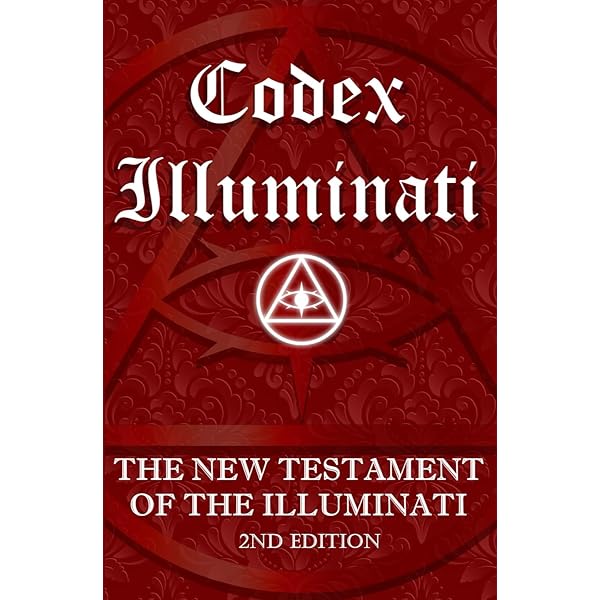
The phrase “ILLUMINATI – The First Testament” evokes a sense of mystery, secret wisdom, and the earliest foundations of one of the most discussed secret societies in history. For centuries, the name Illuminati has captured the imagination of historians, researchers, and enthusiasts interested in hidden knowledge and secret organizations. Although the historical Illuminati existed for only a short time, its legacy has inspired countless interpretations in literature, media, and modern conspiracy theories. ILLUMINATI – The First Testament
“Illuminati – The First Testament” often refers to the earliest teachings, philosophical principles, and ideological roots associated with the Illuminati. These foundational ideas emerged during the Enlightenment era, a time when intellectuals across Europe promoted reason, education, and the pursuit of knowledge as tools for improving society.
This comprehensive description explores the origins of the Illuminati, the philosophical ideas that formed its earliest “testament,” the symbolism associated with the group, and the lasting cultural influence of Illuminati mythology. ILLUMINATI – The First Testament
The Origins of the Illuminati
The historical Illuminati was founded in 1776 in Ingolstadt by Adam Weishaupt, a professor of canon law at the University of Ingolstadt. ILLUMINATI – The First Testament
Weishaupt lived during the Age of Enlightenment, a time when European thinkers challenged traditional authority and emphasized the importance of reason, science, and education. ILLUMINATI – The First Testament Enlightenment philosophers believed that society could progress through rational thought, intellectual freedom, and the pursuit of knowledge. ILLUMINATI – The First Testament
The Illuminati was originally created as a secret intellectual society dedicated to spreading Enlightenment ideas and encouraging philosophical discussion among educated individuals. Members believed that knowledge and critical thinking could help humanity overcome superstition and oppressive systems. ILLUMINATI – The First Testament
In this context, the idea of “The First Testament” can be understood as the earliest philosophical vision and guiding principles that inspired the creation of the Illuminati. ILLUMINATI – The First Testament
Understanding the Meaning of “The First Testament”

The term “First Testament” is not an official document or historical record associated with the Illuminati. Instead, it is often used symbolically to describe the foundational teachings and early ideology of the organization. ILLUMINATI – The First Testament
This concept refers to the original intellectual mission of the Illuminati—an effort to promote enlightenment, education, and independent thinking in a world where knowledge was often controlled by powerful institutions. ILLUMINATI – The First Testament
The earliest principles associated with the Illuminati included several key ideas:
The Pursuit of Knowledge
Members believed that knowledge was the key to human progress. Education and intellectual curiosity were encouraged as tools for personal and societal improvement. ILLUMINATI – The First Testament
Freedom of Thought![ILLUMINATI" The First Testament of the Illuminati: [FULL AUDIOBOOK] - YouTube](https://i.ytimg.com/vi/PwJmxnIc5Ws/maxresdefault.jpg)
The Illuminati supported open debate and the questioning of traditional authority. Enlightenment thinkers believed that individuals should be free to explore ideas without fear of persecution. ILLUMINATI – The First Testament
Ethical Reform
Many Enlightenment philosophers believed that societies should be guided by rational laws and ethical principles rather than absolute monarchy or inherited power. ILLUMINATI – The First Testament
Personal Enlightenment
Members were encouraged to develop their intellect and character, striving to become enlightened individuals capable of contributing to social progress. ILLUMINATI – The First Testament
These principles collectively represent what many modern interpretations call the “First Testament of the Illuminati.”
Enlightenment Philosophy and Intellectual Influences
The ideas behind the Illuminati were strongly influenced by Enlightenment philosophers who encouraged people to question authority and pursue knowledge through reason. ILLUMINATI – The First Testament
Thinkers such as Immanuel Kant, Voltaire, and Jean-Jacques Rousseau played a significant role in shaping the intellectual environment of the time.
These philosophers promoted several revolutionary ideas:
-
The importance of individual freedom
-
The value of scientific reasoning
-
The necessity of education and intellectual inquiry
-
The belief that governments should serve the people
Although the Illuminati was not directly controlled by these philosophers, their writings helped create the intellectual climate that inspired its formation. ILLUMINATI – The First Testament
The Structure of the Illuminati
Like many secret societies of the 18th century, the Illuminati adopted a hierarchical structure with multiple levels of membership. ILLUMINATI – The First Testament
The organization also used practices common among secret societies, including:
-
Code names for members
-
Secret meetings
-
Initiation rituals
-
Symbolic teachings
Some of these practices were influenced by the traditions of the Freemasons, one of the most well-known fraternal societies of the era. ILLUMINATI – The First Testament
However, the Illuminati differed from many other secret societies because it focused heavily on intellectual discussion and philosophical education rather than purely social activities. ILLUMINATI – The First Testament
Illuminati Symbols and the Language of Enlightenment
Although the historical Illuminati did not leave behind a widely recognized official symbol, many images later became associated with the organization. ILLUMINATI – The First Testament
The most famous symbol linked to the Illuminati is the Eye of Providence. ILLUMINATI – The First Testament
This symbol depicts a single eye enclosed within a triangle and surrounded by rays of light. Historically, it represented divine awareness or the presence of a higher intelligence observing humanity.
Over time, the symbol came to represent enlightenment, knowledge, and awareness—concepts closely related to the philosophical ideals of the Illuminati.
The Eye of Providence also appears on the United States one-dollar bill, where it sits above an unfinished pyramid on the Great Seal of the United States.
Although this imagery is often cited in conspiracy theories about the Illuminati, historians generally agree that the symbol was chosen for its broader Enlightenment meaning rather than any direct connection to the secret society.
The Pyramid and Symbolic Hierarchy
The pyramid is another symbol frequently associated with Illuminati imagery.
Symbolically, the pyramid can represent:
-
Strength and stability
-
The gradual progress of civilization
-
Structured hierarchy
The unfinished pyramid on the Great Seal of the United States symbolizes a nation still growing and evolving under the guidance of enlightenment and reason. ILLUMINATI – The First Testament
In conspiracy narratives, however, the pyramid is sometimes interpreted as a metaphor for a hierarchical global system controlled by powerful elites at the top.
These interpretations have contributed to the ongoing fascination with Illuminati symbolism. ILLUMINATI – The First Testament
The Suppression of the Illuminati
Despite its intellectual ambitions, the Illuminati did not survive long as an organization.
In the late 1780s, the Bavarian government became concerned about the influence of secret societies. Authorities feared that such organizations could undermine political and religious institutions.
As a result, Bavaria enacted laws banning secret societies, including the Illuminati.
The organization was officially dissolved, and many of its documents were seized.
However, rumors quickly spread that the Illuminati had continued to exist in secret, which fueled speculation and conspiracy theories for centuries.
The Emergence of Illuminati Conspiracy Theories
Following the suppression of the Illuminati, writers and political commentators began speculating about the group’s influence.
Some critics claimed that the Illuminati had infiltrated governments, religious institutions, and financial systems.
Over time, these claims developed into elaborate conspiracy theories suggesting that the Illuminati secretly controls global politics and culture.
Although historians have found no credible evidence supporting these claims, the myth of the Illuminati has persisted in popular culture.
Illuminati Mythology in Literature and Media
The mysterious reputation of the Illuminati has made it a popular subject in books, films, and television.
One of the most influential modern portrayals of the Illuminati appears in Angels & Demons by Dan Brown.
In the novel, the Illuminati is depicted as an ancient secret organization seeking revenge against the Catholic Church.
Although this story is fictional, it helped introduce millions of readers to the mythology and symbolism associated with the Illuminati.
Illuminati Imagery in Music and Popular Culture
In modern entertainment, Illuminati symbols are often used for visual impact and artistic style.
Some fans believe that certain celebrities display Illuminati symbols in music videos or performances. Artists such as Beyoncé and Jay-Z are frequently mentioned in these discussions.
Visual elements such as triangles, eyes, and pyramids are sometimes interpreted as secret messages connected to the Illuminati.
However, most artists explain that these images are simply creative design elements rather than evidence of secret societies.
The Psychology Behind Illuminati Fascination
The enduring popularity of Illuminati myths can be explained through psychology.
Humans naturally look for patterns and hidden meanings in symbols and events. Secret societies and mysterious symbols create a sense of intrigue and excitement.
Conspiracy theories also offer simple explanations for complex global events, which can make them appealing to some audiences.
These psychological factors help explain why the legend of the Illuminati continues to thrive in modern culture.
Illuminati Symbolism in Modern Design
Today, Illuminati-inspired imagery is commonly used in graphic design, fashion, and digital art.
Designers frequently incorporate elements such as:
-
Eye symbols
-
Triangles
-
Pyramids
-
Geometric patterns
These images evoke mystery, knowledge, and ancient symbolism, making them visually appealing for modern audiences.
As a result, Illuminati symbolism has become a recognizable cultural motif even outside conspiracy narratives.
Separating Myth from Historical Reality
It is important to distinguish between the historical Illuminati and the myths surrounding it.
Historically:
-
The Illuminati was founded in 1776 by Adam Weishaupt.
-
It operated primarily in Bavaria.
-
It was disbanded in the late 1780s by government authorities.
In contrast, modern conspiracy theories portray the Illuminati as a powerful global organization controlling world events.
Most historians agree that these claims are not supported by credible evidence.
The Cultural Legacy of the Illuminati.
Despite its brief existence, the Illuminati has become one of the most famous secret societies in history.
Its legacy continues through:
-
Literature and films
-
Online discussions and conspiracy theories
-
Symbolic imagery in art and design
The idea of “Illuminati – The First Testament” represents the imagined beginning of this tradition—the symbolic origin of the ideas of enlightenment, secret knowledge, and hidden influence that define the mythology of the Illuminati.
Conclusion
The phrase “ILLUMINATI – The First Testament” represents the earliest philosophical vision associated with the historic Illuminati.
Founded in 1776 by Adam Weishaupt in Ingolstadt, the Illuminati began as a secret intellectual society inspired by Enlightenment ideals.
Its early teachings emphasized knowledge, rational thinking, education, and personal development.
Although the organization disappeared centuries ago, its symbolism and mythology continue to influence modern culture.
From the mysterious Eye of Providence to its portrayal in books like Angels & Demons, the Illuminati has evolved into a powerful cultural legend.
Today, the concept of the Illuminati blends history, philosophy, symbolism, and storytelling—ensuring that the mystery of its “First Testament” continues to fascinate people around the world.
